By Daniel Rowles, lead trainer at Target Internet and author of Digital Branding (Kogan Page). Last updated: November 2026.
Working well with Instagram influencers means looking past follower counts and like totals, which are easy to inflate, and judging creators on genuine audience quality, real conversation, brand fit and past results. The best practice is to vet every partner carefully, pay for the work you commission rather than for vanity metrics, make sure every paid post is clearly labelled as an ad, and measure outcomes such as sales and search demand rather than likes.
Influencer marketing has grown enormously since we first published these guidelines. Influencer Marketing Hub estimates the industry reached 32.55 billion US dollars in 2025, up from 24 billion in 2024. More money means more temptation to game the numbers, which makes these principles more important than ever.
How big is the problem of fake influencer engagement?
Much of our thinking on this topic comes from a conversation on The Digital Marketing Podcast with Anders Ankarlid, founder of the eco-friendly brand A Good Company. His company had been working with around 4,000 micro-influencers, with a potential reach he estimated at around 50 million people, but the expected sales simply did not appear.
Ankarlid surveyed his influencer partners anonymously and found that only 36% said they had never used any service to boost their engagement. Around 40% said they used engagement pods, groups of creators who agree to like and comment on each other's posts. As he put it, these are real people, but it is not authentic engagement. He then commissioned HypeAuditor to analyse 1.8 million accounts, and the results suggested that a large share of apparent Instagram activity came from bots and inauthentic accounts.
The specific figures from that 2019 research are now dated, and Instagram has invested heavily in removing fake accounts since then. But the underlying lesson has not changed: engagement figures can be inflated, and micro-influencers with unusually high engagement rates deserve particular scrutiny. Ankarlid's point about the maths is still useful. A micro-influencer with an apparent engagement rate of 10% may have a real rate closer to 1% if most of that engagement comes from pods, friends and family.
Inflated metrics are nothing new, either. Newspapers and magazines have been caught inflating circulation figures in the past. Any media partner, whether a publisher, a platform or an influencer, has an incentive to look as attractive as possible to advertisers, so marketers need to check the numbers carefully.
How do you vet an Instagram influencer?
A structured vetting process protects your budget and your brand. Work through five checks before agreeing any partnership.
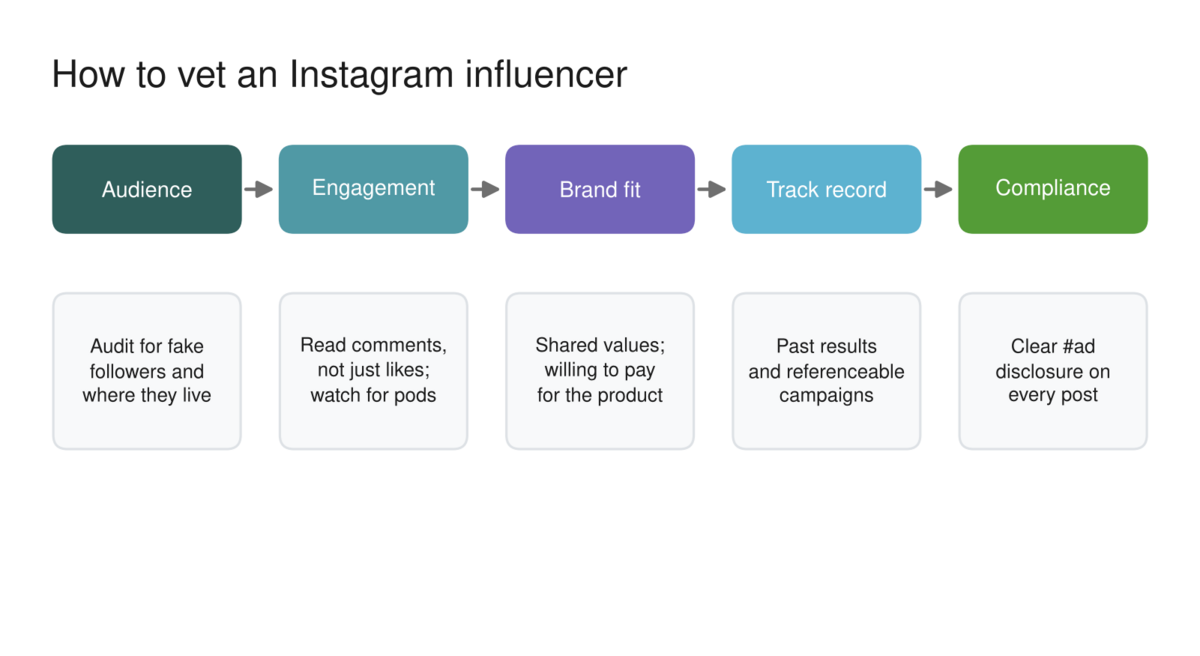
Audience quality. Use an influencer audit tool to estimate the share of suspicious followers and check where the audience is located. A creator with a large following in countries where you do not sell is of limited value, however genuine.
Engagement quality. Read the comments rather than just counting them. Generic comments such as emojis or "great post" from the same accounts on every post are a warning sign of pods or bots. Look for real conversation and questions about products.
Brand fit. Does the creator genuinely share your values and use products like yours? Ankarlid found that asking influencers to pay for the product, even at a heavy discount, was an effective filter. Those who were genuinely interested were happy to pay; those chasing freebies were not.
Track record. Ask for evidence of past results with other brands, such as sales, sign-ups or traffic, not just reach and likes.
Compliance. Check that the creator already labels paid posts clearly. If they do not do it for others, they may not do it for you.
AI can help you screen creators consistently at scale.
Copy and paste prompt: "Act as an influencer marketing analyst. Here is information about an Instagram creator we are considering: follower count [number], average likes [number], average comments [number], audience locations [list], a sample of recent comments [paste], and their recent sponsored posts [describe]. Assess the likely authenticity of their audience and engagement, flag any warning signs, assess how well they fit a brand that [describe your brand and audience], and list the questions we should ask them before agreeing a partnership."
How should you pay Instagram influencers?
Pay for the work you commission, not for the numbers next to the posts. Ankarlid's view was that paying for a defined piece of work, such as a set of posts and stories for a specific campaign, removes the incentive to buy fake engagement. Paying per like or per follower does the opposite.
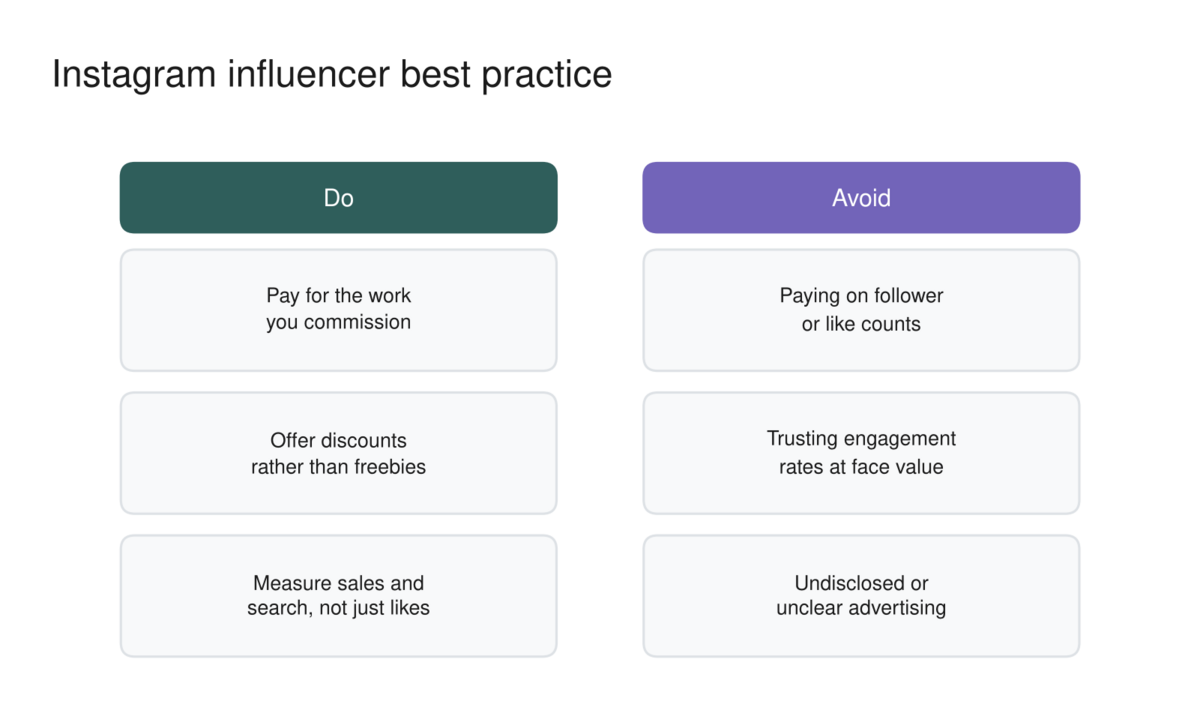
Many brands now combine a fixed fee with performance elements, such as affiliate commission on tracked sales or bonuses for agreed outcomes. This aligns everyone's interests with real results. Replacing free gifts with discounted products, as A Good Company did, is another simple way to find creators who genuinely care about your brand.
Long-term partnerships also tend to outperform one-off posts. A creator who features your product repeatedly over months is far more believable than one who mentions it once between dozens of other sponsored posts.
What are the UK rules for influencer advertising?
In the UK, any content that is paid for or incentivised, including free products, discounts and affiliate links, must be clearly identifiable as advertising. The Advertising Standards Authority's influencers' guide to making clear that ads are ads recommends using a clear label such as "#ad" or "Ad" at the start of the post, rather than burying it among other hashtags or relying on vague terms such as "collab" or "thanks to".
The Competition and Markets Authority also publishes guidance on social media endorsements for content creators. Since 2025, the CMA has had stronger powers to enforce consumer law directly, which makes compliance a serious commercial issue for brands as well as creators. Responsibility is shared: brands should brief creators on disclosure and check that it happens.
Disclosure does not damage performance as much as many marketers fear. Audiences generally accept that creators are paid; what damages trust is discovering that a recommendation was secretly sponsored.
How do you measure Instagram influencer results?
Likes were always a weak measure, and Instagram itself has moved away from them, giving users the option to hide like counts on their own posts and on posts in their feed. Focus instead on outcomes that link to business goals. Useful measures include:
- Sales and sign-ups through unique discount codes or tracked links.
- Website traffic and conversions from each creator, tracked in GA4.
- Branded search demand during and after a campaign.
- Saves, shares and genuine comments, which show real interest better than likes.
- Content value, if you have rights to reuse creator content in your own channels or ads.
Setting these measures up properly requires solid analytics skills. Our free GA4 course on key events shows how to track the actions that matter. Influencer marketing is also one of the fastest-growing areas for marketing careers, as we explain in our guide to new marketing jobs created by AI.
The Target Internet platform can help you build these skills, with interactive courses across digital marketing and AI, skills benchmarking to show where your gaps are, accredited certification, over 400 episodes of the Digital Marketing Podcast, and monthly live masterclasses.
Frequently asked questions
How can you tell if an Instagram influencer has fake followers?
Use an influencer audit tool to estimate suspicious followers, check where followers are located, look for sudden jumps in follower numbers and read the comments. Repetitive, generic comments from the same accounts suggest bots or engagement pods rather than a genuine audience.
What is an engagement pod?
An engagement pod is a group of creators who agree to like and comment on each other's posts to boost their engagement rates. The people are real, but the engagement does not reflect genuine audience interest, so it can make a creator look far more influential than they are.
Are micro-influencers better than larger influencers?
Micro-influencers often have closer relationships with their audiences and can be very effective, but their high engagement rates deserve extra scrutiny. Judge each creator on audience quality, brand fit and past results rather than size alone.
Do influencers have to use #ad in the UK?
Paid or incentivised content must be clearly identifiable as advertising. The ASA recommends a clear, upfront label such as "#ad" or "Ad". Vague terms or labels hidden among other hashtags are unlikely to be enough.
How should you pay an Instagram influencer?
Pay for clearly defined work rather than for likes or follower numbers, and consider adding performance elements such as commission on tracked sales. This rewards real results and removes the incentive to inflate engagement.
If you are ready to take a structured approach to building your digital marketing skills, explore Target Internet membership options and discover how the platform's interactive courses, benchmarking tools, podcast, accredited certification and live masterclasses can help you run influencer programmes that deliver real results.
About the author
Daniel Rowles is lead trainer at Target Internet and the author of Digital Branding (Kogan Page). He co-hosts The Digital Marketing Podcast and delivers digital marketing and AI training for organisations around the world, including digital transformation and future skills. You can find out more on his Target Internet profile.
Bibliography
1. Influencer Marketing Hub (2025). Influencer Marketing Benchmark Report 2025. https://influencermarketinghub.com/influencer-marketing-benchmark-report/
2. Ankarlid, A. (2019). The 744M influencer marketing scam. https://medium.com/@aa_88162/influencerstudy-agoodcom-4c7ac6c27fae
3. Advertising Standards Authority (2026). Influencers' guide to making clear that ads are ads. https://www.asa.org.uk/resource/influencers-guide.html
4. Competition and Markets Authority (2026). Social media endorsements: guidance for content creators. https://www.gov.uk/government/publications/social-media-endorsements-guidance-for-content-creators